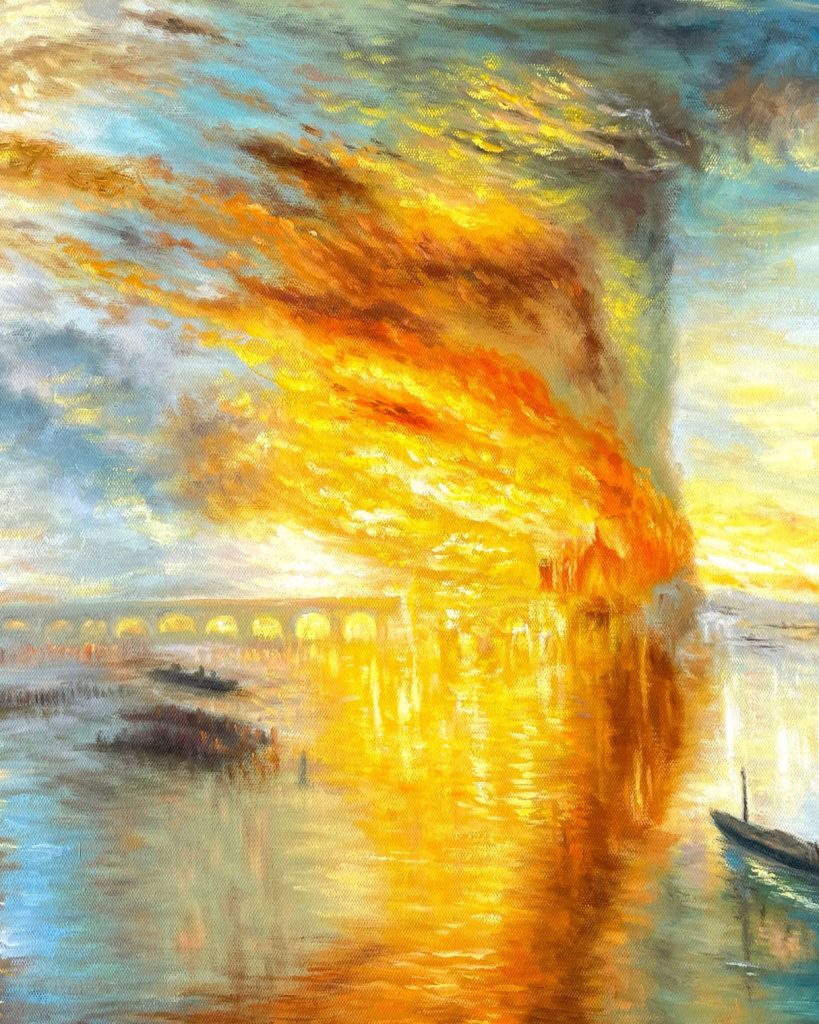
The Burning of the House of Lords and Commons by J.M.W. Turner, Public Domain.
All cultures worship fire—the borrowed energy from the unknown, hollow yet infinite, fleeting yet absolute.
In Wu Xing (五行) philosophy, fire is more than flame—it is light itself. Yet even today, light escapes full understanding. It is the movement of electrons, the pulse of the cosmos, the essence of vision.
Among all the ancient elements, only fire is a paradox: it is everything, yet not a material object. It is a borrowed force arising from nowhere, revealing itself without form—something we experience but cannot hold. Fire burns in the heavens and the hearth, belongs to no one, and yet builds worlds. This is why it remains sacred.
We see fire as the metaphor for spirit and soul precisely because it is temporary, elusive, and ultimately unknowable. We live by sensing the desire of fire—even though light itself remains neutral. When energy begins to flow, a carbon-based lifetime emerges. Eating is our first response to the borrowed flame. Hunger reminds us that life is fueled by something external.
Fire is how we witness energy. It releases stored sunlight captured through photosynthesis, transforming it into heat and warmth. Thus, we kindle fires in darkness—crafting rituals, myths, and metaphors to touch what otherwise remains intangible. Perhaps we may live convincingly content lives, yet the truth of energy stays just beyond our reach. Only at the end of time might fire fully reveal what it has always been.
Civilization began by touching that borrowed fire. Spirit and soul arose from witnessing an energy that could never fully belong to us, but always beckoned us forward, guiding us toward diverse definitions of our destination.
We associate fire with affection—for good reason. It’s not merely fierce or passionate; it’s intimate, changeable, and beautiful in its variability.
According to Wu Xing philosophy, the god of fire rules summer, a season that arrives passionately, burns intensely, and fades quickly. It also poetically places fire within our eyes and hearts. Eyes alive with light reflect one’s spirit. A glowing gaze signals fire energy—immediate, animated, impossible to fake. Even without words, fire flickers behind the iris, expressing emotions speech struggles to contain. A glance can soften boundaries, leap across silence, carry warmth like a flame passed gently from one wick to another.
The heart, too, embodies fire. It beats inside us, alive and rhythmic—an affectionate flame. Sometimes, when I lie down, I hear the sound of my pulse, pounding like a bonfire at a riverbank. The mind might create and reflect cool, abstract imagery, but the heart burns warmly, sparks radiating outward into the cosmos within and beyond.
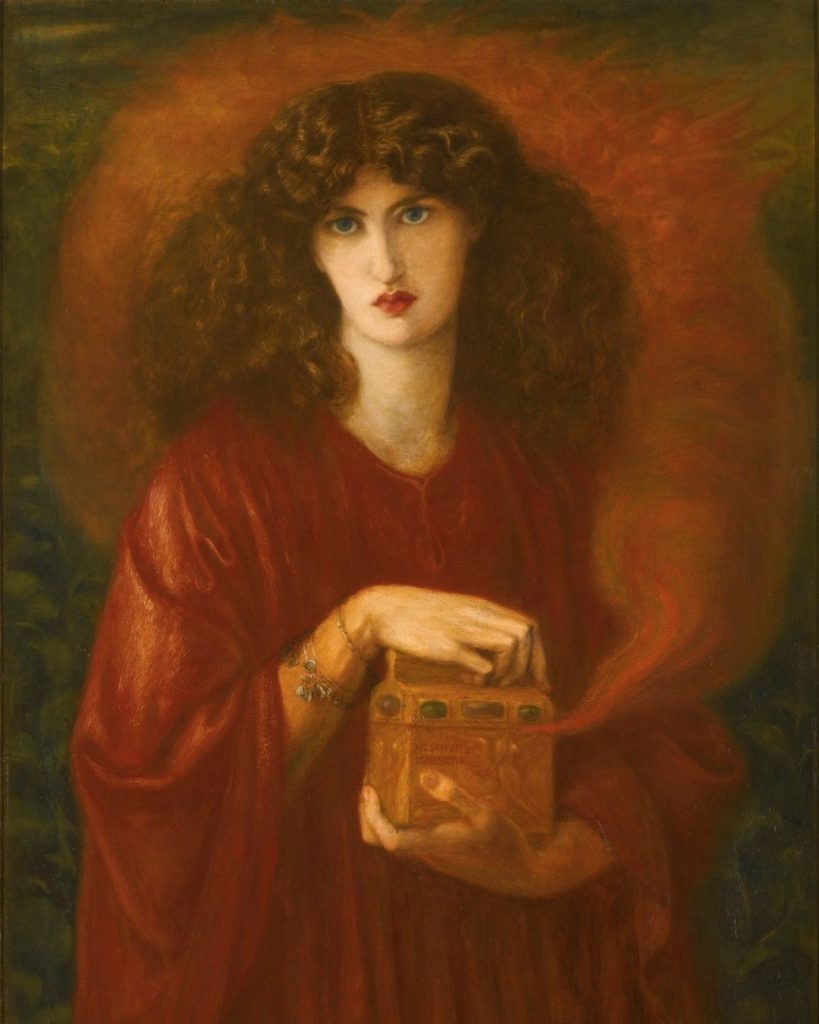
Pandora by Dante Gabriel Rossetti, Public Domain.
Myth has always acknowledged this connection. Egyptians placed fire in the eye of Ra—fierce enough to guard the world, affectionate enough to sustain it. In Hindu cosmology, Agni gently bridges humans and gods, carrying prayers and offerings through fire. Norse warriors were said to have an eldhjarta—a fire-heart, courageous and warm.
Yet, to grasp fire’s deeper nature, we must move beyond emotions and intuitions, diving courageously into the unknown.
The distinction between Yang fire and Yin fire lies in our experience of time and energy. This duality is especially vivid in summer: passionate heat dominates the daytime, transient yet unforgettable because it cannot last; at night, the clear, starry sky emerges, shimmering in our imagination.
Daytime light is Yang.
Nighttime light is Yin.
Sunlight—direct, warm, immediate—is Yang.
Reflected or distant light—cool, symbolic, imagined—is Yin.
Yang fire manifests as presence: the sun nurturing life, the hearth uniting people, the candle illuminating shared moments, the oven transforming gifts into nourishment.
Yin fire exists at a distance: distant stars, deep-sea bioluminescence, phosphorescence glowing in decay—unreachable yet deeply felt in our beliefs.
This duality mirrors human existence. Some lights touch our skin directly, altering our bodies and the air we breathe. Others burn invisibly within—shaping thoughts, dreams, and memories.
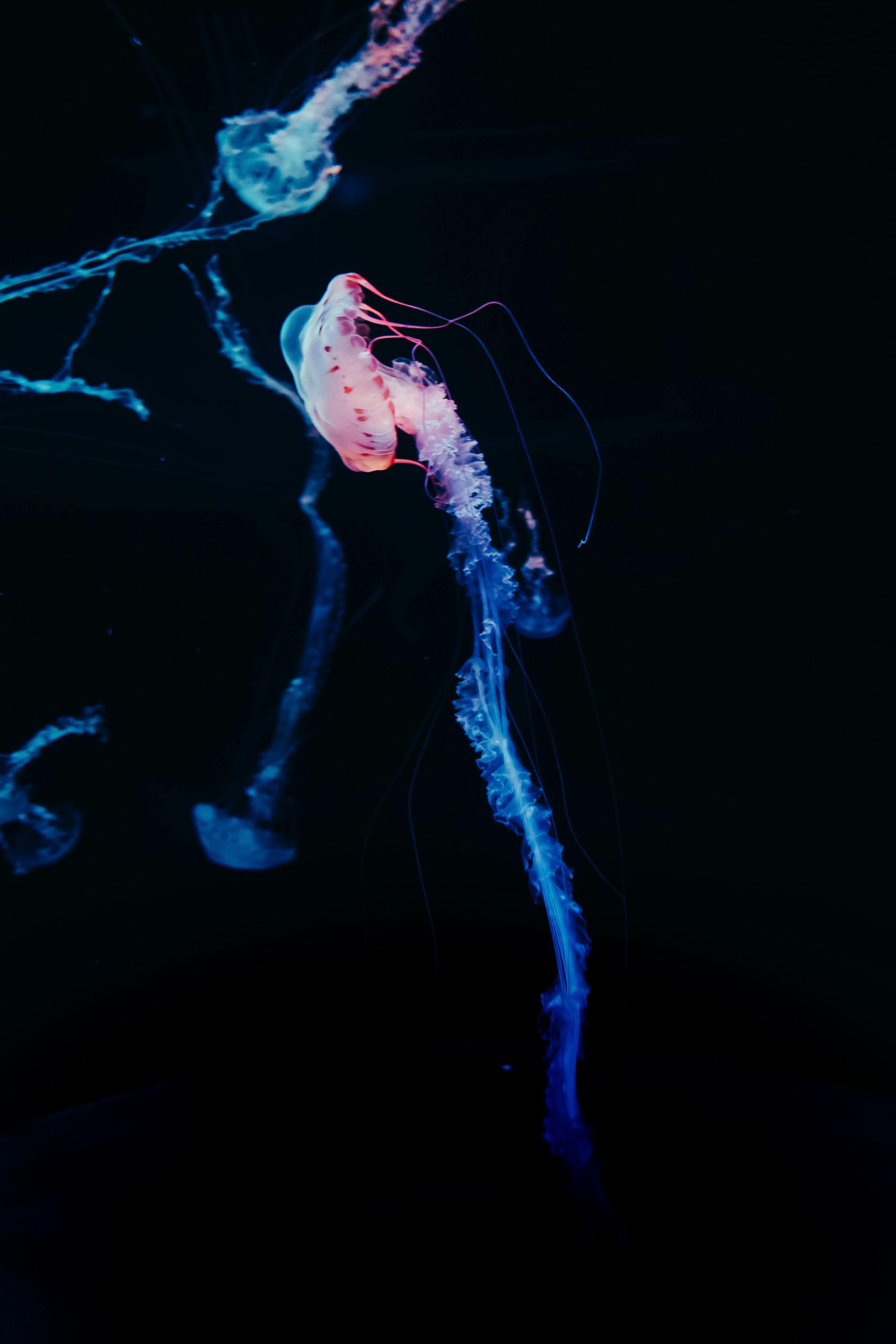
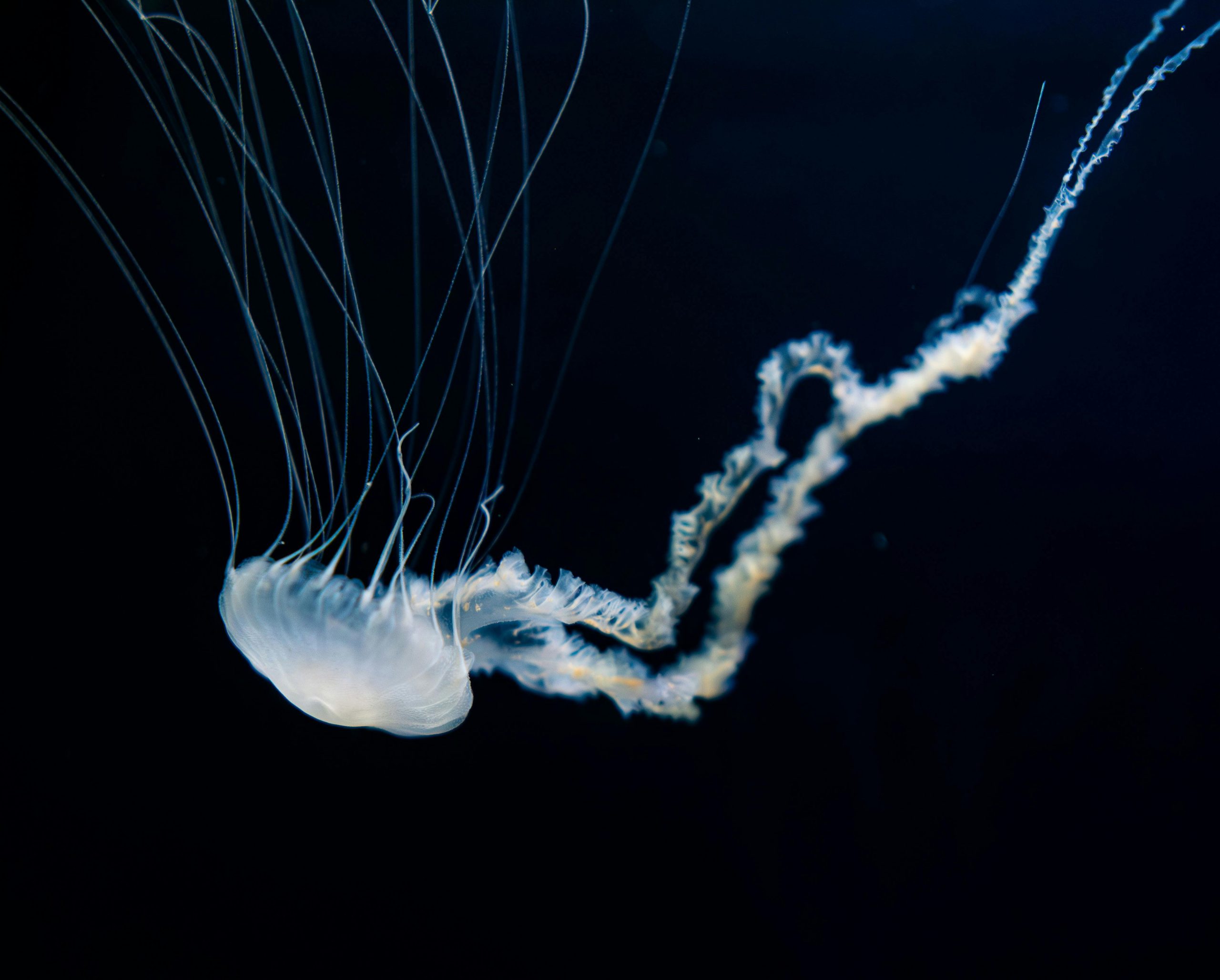
Photo by Anil Sharma
Pure light holds infinite potential, but fire is its chosen form—visible, emotional, transformative. Humans picked up a seed of fire, a Yang expression of energy, and shaped it into civilization. We learned to command what might otherwise destroy us.
We imagine futures bathed in sunlight, progress as a forward blaze. Yet thought itself is a form of Yin fire. Consciousness remains unknown and universal, a distant yet persistent flame —no less mysterious than signals from galaxies we’ll never reach.
What fascinates me most is how Chinese culture consistently favors Yin fire above all other elements. We are drawn to the unreal, the unprovable, the metaphorical. Instead of logic and experimentation, we explain our world through reflections and analogies. This instinctive preference makes Chinese thought deeply poetic, spiritual, and artificial—in a profoundly limiting way. We build civilizations dependent on symbolic meanings, we live in worlds fragile and disconnected from reality.
In Chinese astrology, those with a day pillar of Yin fire (丁火) are seen as enthusiastic, artistic and persuasive. I won’t argue—I’m among them. We live comfortably among myths and illusions. Yet deep inside, I know there’s no peace in a heart living beneath relentless light pollution. Some of us need shadows to dream.
To benefit from fire, we rely on mediums—substances that capture and channel its immense power. Have we ever truly tamed fire? My instinct immediately says no, for fire remains natural, wild, and elusive. Yet I am continuously amazed by everything civilization has built from this borrowed flame. Wood, metal, and earth—each medium offers a unique narrative, turning fire’s intangible magic into reality.
Wood is fire’s oldest companion, intimately bound to life itself. Together, wood and fire ignite the first sparks of biology and chemistry. Early civilizations arose from the smoke drifting from burning plants—cooking food, warming shelters, and forging communities around shared hearths. The union of wood and fire inspired humanity’s earliest innovations: language, culture, and spirituality. Even today, seeking spiritual reflection in the present, we still ignite a gentle flame, awaiting a quiet story of generosity, guiding our lost spirits toward clarity.
Metal carries fire into a different dimension—precise, disciplined, and controlled. Unlike wood, metal rarely exists in nature ready for immediate use; it demands careful refinement through intense, dedicated heat. Metal comes to life through fire, shaped by human mastery into forms of precision and efficiency. Refined metal redefines fire, channeling it into electricity’s rhythmic pulse, wealth, capitalism, machinery, and cities glittering gloriously through the night. If wood-fire symbolizes warmth, community, and tradition, metal-fire embodies ambition, structure, and civilization’s relentless pursuit of advancement.
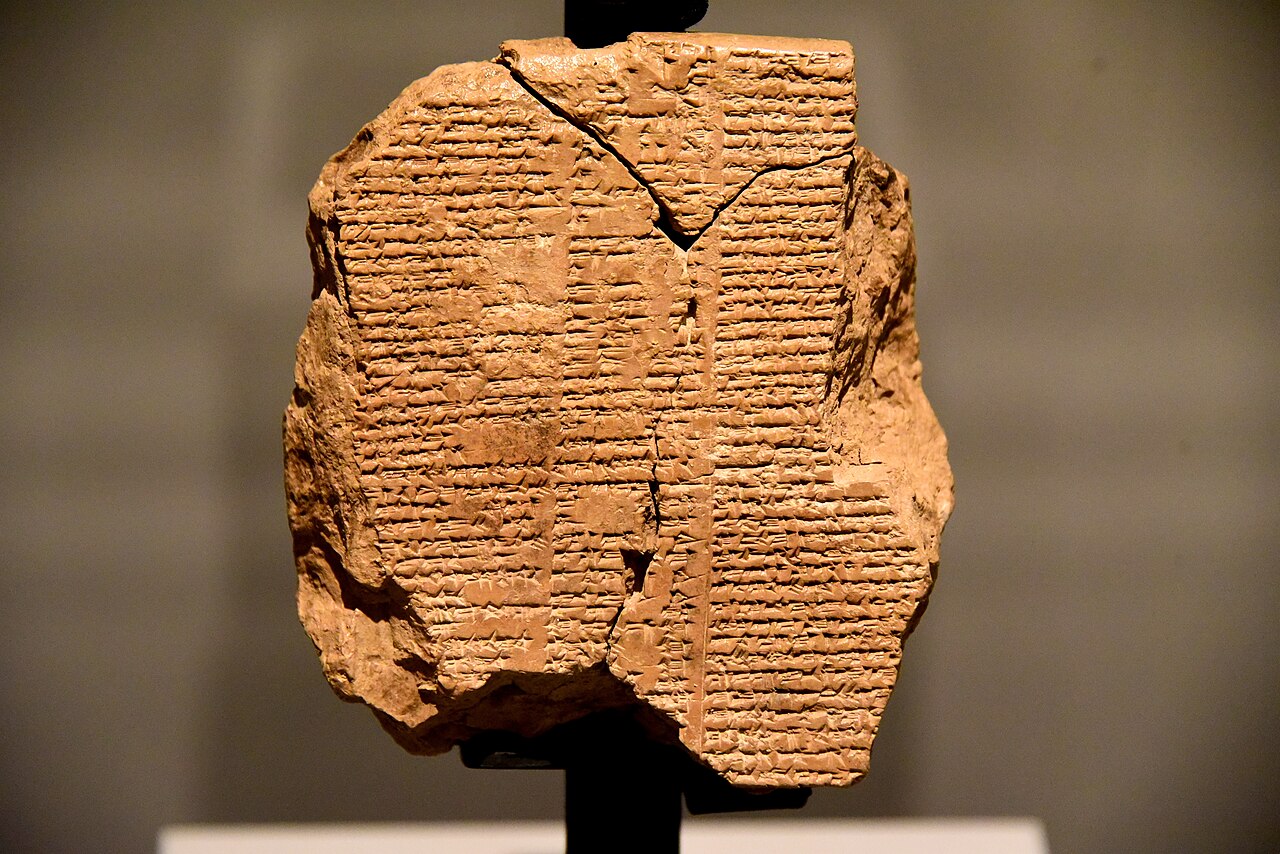
Image by Osama Shukir Muhammed Amin FRCP (Glasg), via Wikimedia Commons, CC BY-SA 4.0.
Yet, with Earth, fire finds contemplation and renewal. In Wu Xing philosophy, fire gives birth to earth—a surprising yet intuitive connection, as the earth itself was formed from fiery debris and stardust scattered across the cosmos. Earth gently contains fire, transforming destruction into creativity and decay into fertility. Clay tablets preserved humanity’s knowledge, long before the Rosetta Stone and the epic of Gilgamesh. Bricks shelter our families; ashes fertilize our fields; volcanic soils enrich vineyards. We cherish earth not just for its direct gifts, but because it closely mirrors our own nature. Wood and metal move fire from East to West, shaping human destiny through science and fantasy. Yet earth remains patient, holding fire softly, quietly preparing for its inevitable rebirth.
Cultures differ profoundly in interpreting fire’s power, yet one universal truth remains: Whoever commands fire commands civilization. Ancient priests guarded sacred flames; today, tech oligarchs guard electronic fires. Both derive power solely because our collective consciousness accepts their metaphors as reality. The keeper of metaphors shapes civilization’s identity, infuses wisdom with charisma, directs prevailing beliefs, and visibly affects destiny itself.
Just as the four seasons each carry their elemental spirit, the four cardinal directions have elemental rulers—wood in the East, fire in the South, metal in the West, water in the North—with earth anchoring the center. The East, ruled by wood, nourishes civilizations emphasizing spirit, renewal, and continuous life cycles. The West, ruled by metal, embraces adventure, conquest and individual achievement.
Yet both East and West display imbalances in their relationship with metaphor. The East is overwhelmed by imagery—profound, coarse, purposive, heavenly, abstract, excessively spiritual—all entangled together, exhausting the culture and blurring reality. Traditional Chinese medicine perfectly embodies this dilemma perfectly. It has and theories and terminologies, but the entire process revolves around diagnosing illness primarily through metaphor. Critical truths about health, life, and death risk becoming mere riddles. Excess water and flourishing wood might poetically describe rheumatism, but the immune system doesn’t speak Imagist poetry. Physicians and patients alike mechanically submit to metaphors without fully grasping their meanings. Truth, after all, speaks many languages—something still relatively new to the East.
Meanwhile, the West—driven by pragmatism and material mastery—has gradually lost its poetic imagination. Its metaphors have grown literal, dry, and spiritually vacant, leaving a rigid culture constantly thirsty for meaning. Westerners today repeatedly seek renewal through Eastern symbols, consciously appropriating them to revive their own beliefs, often sensing something intangible just beyond their calculated grasp.
Thus, the battle for civilization is fundamentally a contest over metaphors. Who, then, should decide the metaphors that guide our narratives, our actions, and ultimately our lives?
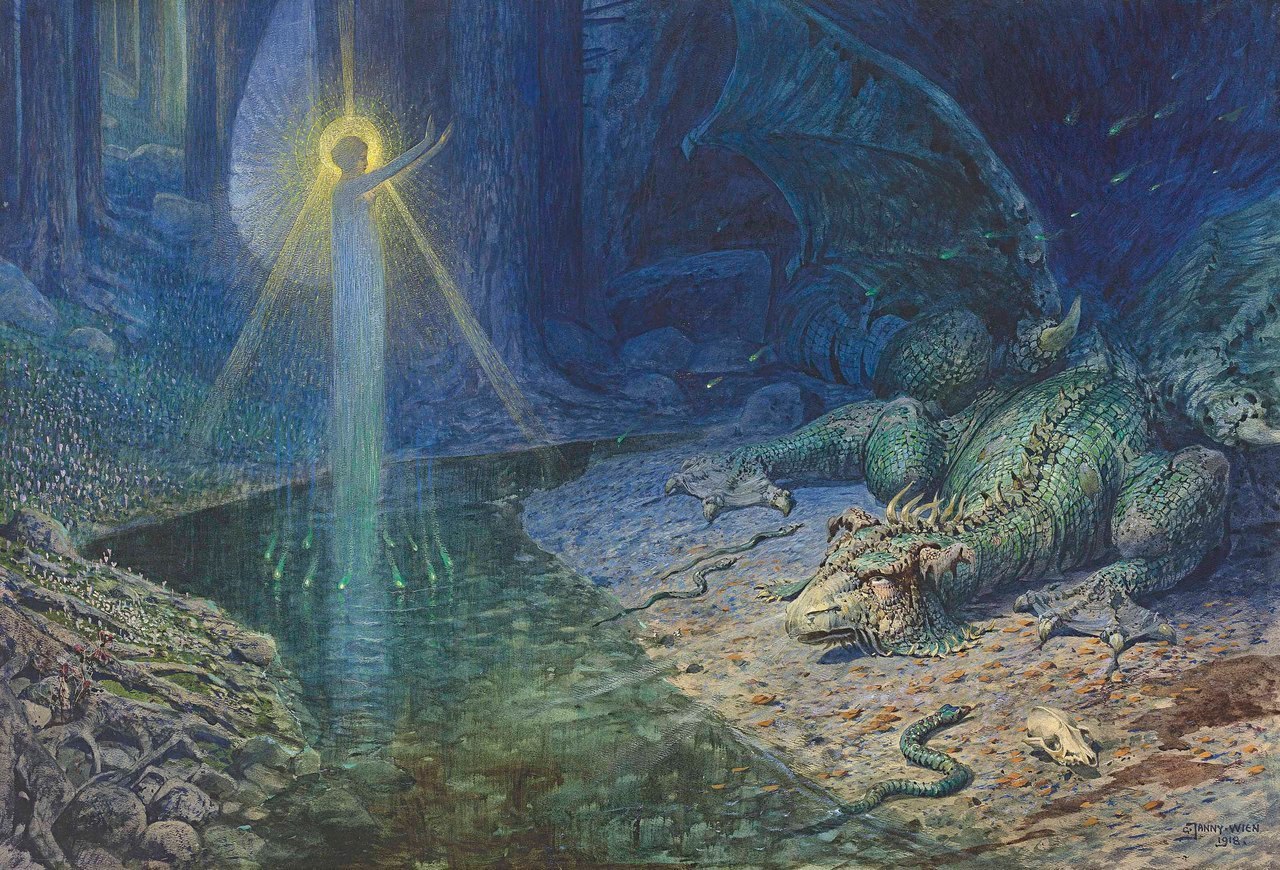
An Allegory of Power by Georg Janny, 1918
I have an unwavering answer: the keeper of the flame must always be the most authentic, rational, and genuinely logical individual. The high priest’s torch belongs neither to metaphor-addicted mystics nor spiritless oligarchs. It cannot. Only those who skillfully navigate metaphor, yet faithfully return to reality, can grasp wildfire with bare hands without being burned.
Throughout history, scientists and innovators have always drawn inspiration from ancient spiritual worlds and metaphors. It’s neither outdated nor shameful—it’s simply human. Gustav Mahler wisely said, “Tradition is not the worship of ashes, but the preservation of fire.” As long as the flame remains new, as long as we feel responsible for our shared fate, the future will brighten.
Amid modernity’s dangers, our undying faith lies in the authenticity of human nature itself. Only authentic individuals can ignite a true civilization—one that is evolutionary, rational, inspiring, and profoundly human. Ultimately, civilization survives only if we entrust its flame to those who deeply understand that progress demands a flexible balance between imagination and reality, poetry and precision. May we hold it carefully yet courageously—passing the borrowed fire into the hands of truth itself.
Explore other elements